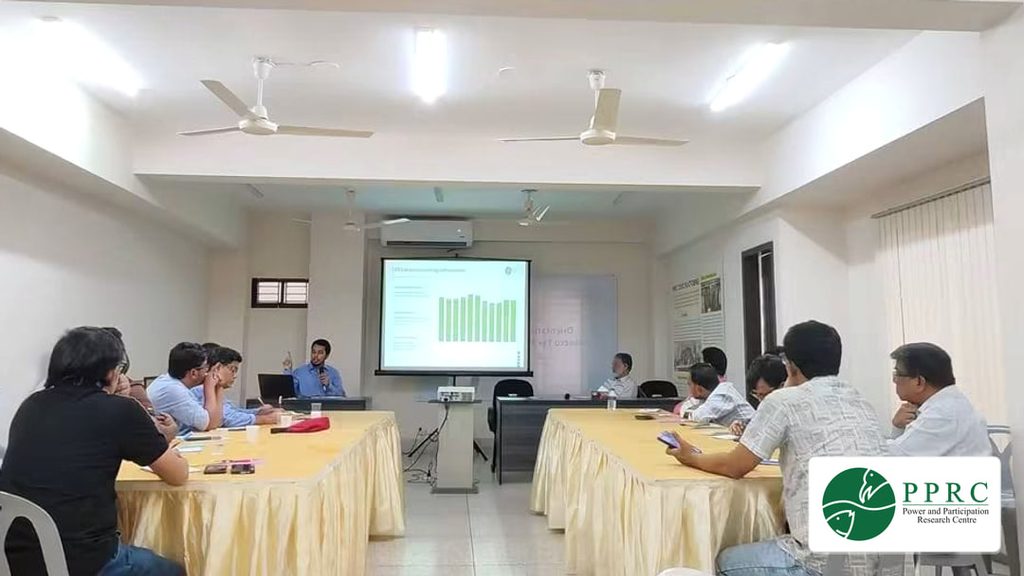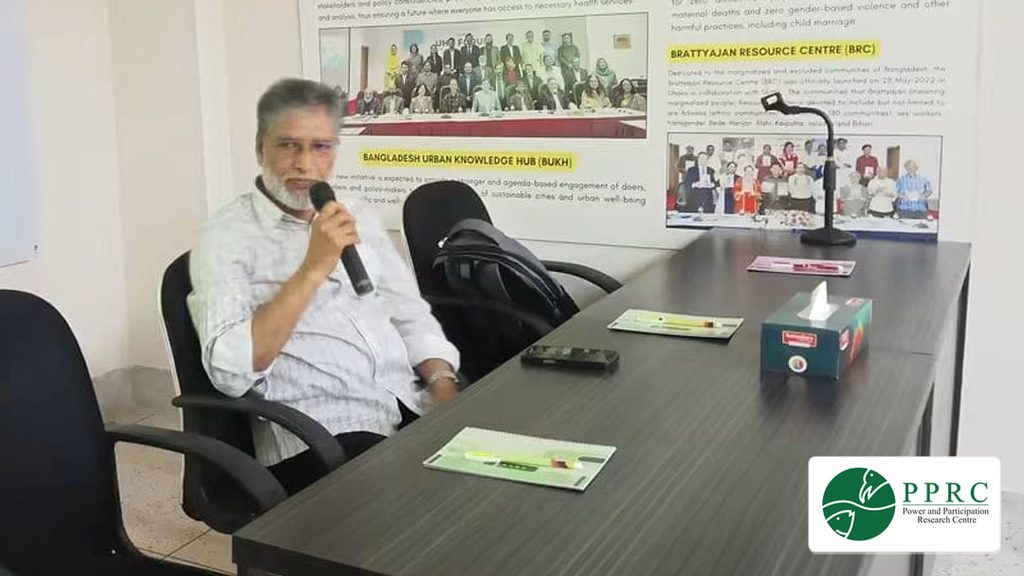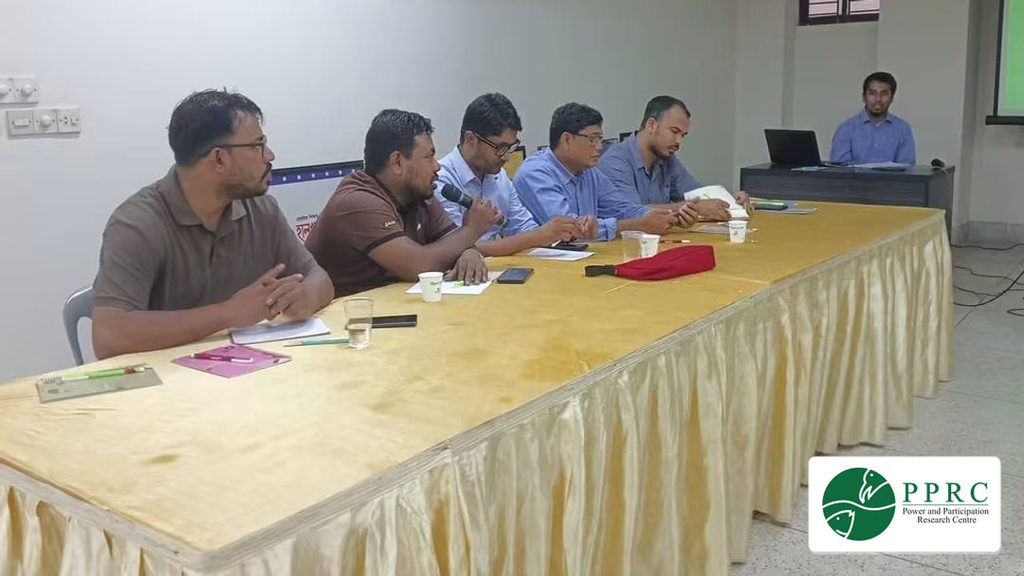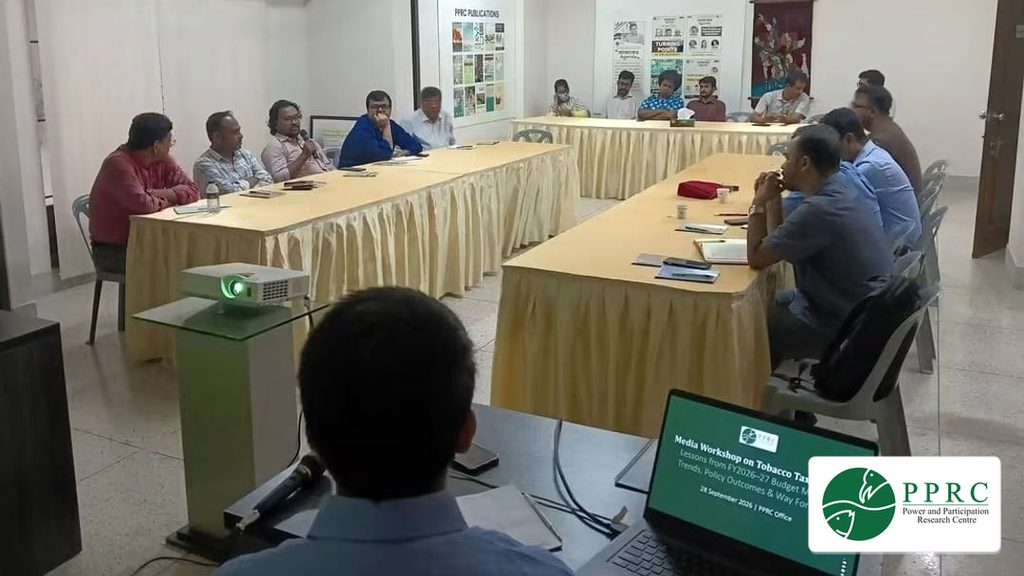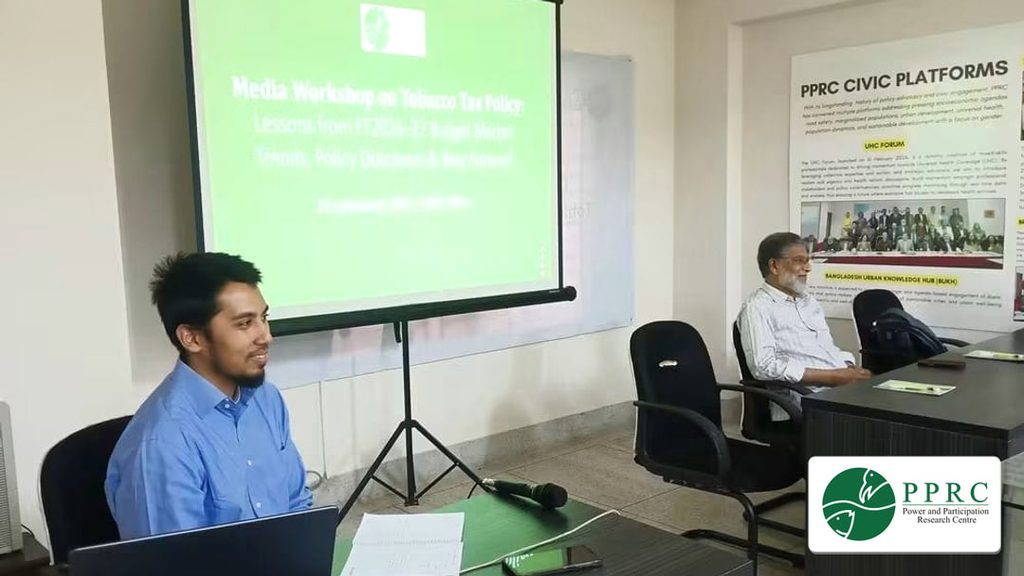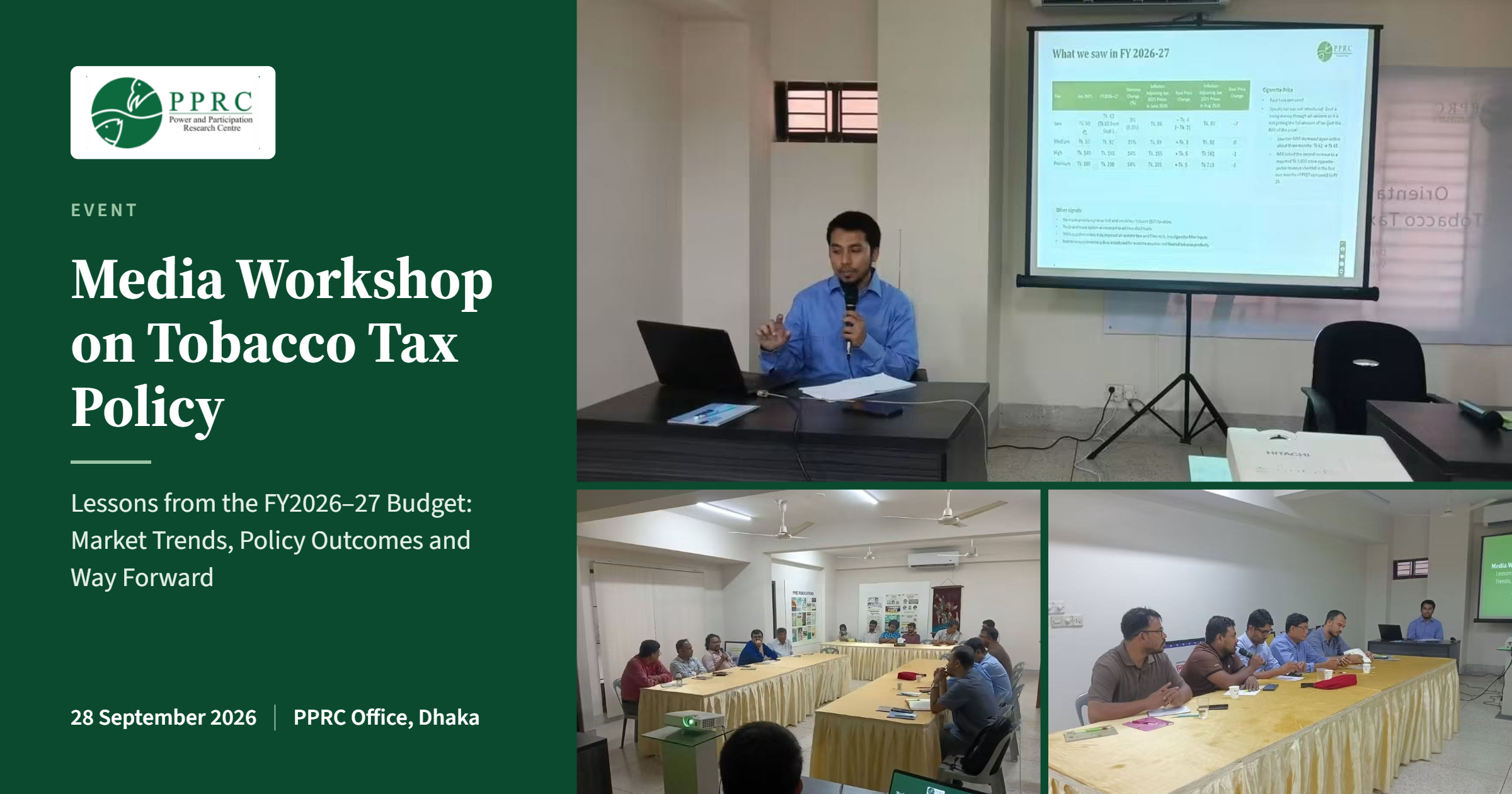
On 28 September 2026, the Power and Participation Centre (PPRC) organized a workshop titled, “Media Workshop on Tobacco Tax Policy: Lessons from FY 2026–27 Budget Market Trends, Policy Outcomes & Way Forward.” The event was led by PPRC Senior Research Associate Mohammad Ihtesham Hassan, and brought together journalists, researchers and public-health stakeholders. Discussions examined Bangladesh’s current tobacco tax policies, emerging cigarette market trends, the initial implications of the FY 2026-27 budget, and the wider fiscal pressures facing the National Board of Revenue (NBR).
One of the main themes of the workshop was the distinction between nominal price increases and inflation-adjusted, or real, price changes across Bangladesh’s four cigarette price tiers. In the low tier, the minimum retail price (MRP) for a pack rose nominally from Tk 60 in January 2025 to Tk 65 in September 2026, yet the real price fell by approximately 7% after adjusting for inflation. In the medium tier, the MRP increased from Tk 80 to Tk 92 under the FY 2026–27 pricing structure, but there was virtually no change in the inflation-adjusted price. For the high and premium tiers, minimum retail prices increased to Tk 160 and Tk 210 respectively, while real prices fell by approximately 1% and 4%.
These findings suggest that nominal price increases did not keep pace with inflation across most tiers. As a result, cigarettes became cheaper in real terms in those tiers despite increases in their listed prices. The session also highlighted Bangladesh’s continued reliance on an ad-valorem cigarette tax structure, under which supplementary duty is levied as a percentage of the declared retail price, alongside VAT and other applicable levies. The FY 2026–27 budget retained the four-tier cigarette pricing structure and did not introduce a specific tax component.
PPRC also presented an analysis of the NBR administrative data spanning FY 2006-07 through FY 2025-26, which revealed a bizarre market paradox in the past 5 years. Total cigarette sales have fallen for the past two years consecutively, from 9,026 crore sticks to 6,757 crore in FY 2023-24 and then to 5,826 crore sticks in FY 2024-25. Despite the decline in stick sales, cigarette tax revenue continued to rise.
Over the same period, the low-tier market share fell from 77% in FY 2021–22 to below 49% by May 2026, while the medium-tier share rose from 9% to 42%. This shift towards higher-priced segments helps explain how cigarette tax revenue can continue to rise even when overall sales decline. The evidence therefore indicates that lower cigarette supply does not necessarily translate to lower revenue; outcomes depend on prices, tax rates, market composition, consumer responses and tax administration.
At the same time, this pattern should be interpreted with caution. PPRC noted that part of the shift from the low to the medium tier reflects brand reclassification following the January 2025 price revision, and therefore cannot be attributed solely to consumers moving towards higher-priced cigarettes. The workshop also cautioned that declining cigarette supply, on its own, cannot establish a decline in smoking prevalence or consumption; stronger demand-side and prevalence data are needed to understand the underlying market changes. Nevertheless, the continued increase in revenue despite lower sales indicates that higher tax rates need not necessarily result in revenue loss to the national exchequer. The changing composition of the market also raises important questions about cigarette affordability.
Another theme being discussed during the session was the wider fiscal context confronting NBR.With FY 2026-27 national budget setting an unprecedented spending target of Tk 9,38,000, NBR has a revenue target of Tk 6.04 lakh crore. As the NBR is responsible for around 85% of total government revenuemaintaining stable and predictable revenue streams is a central fiscal priority. Historically, cigarette taxes have accounted for roughly 10–13% of total NBR collection, making tobacco tax an important source of government revenue. This dependence creates an inherent policy tension: while higher tobacco taxes can advance public health objectives and strengthen revenue mobilisation, the NBR also has an interest in avoiding abrupt market disruptions that could undermine expected collections.
Media reports indicated around Tk 3,000 crore year-on-year cigarette tax revenue shortfall during July-August 2026. PPRC’s analysis cautioned that part of this apparent gap may reflect VAT payment timing delays rather than a permanent deterioration in revenue collection. When adjusting for maximum illustrative VAT timing differences, the actual revenue collection shortfall shrinks to Tk 1,940.2 crore. This figure is an illustrative sensitivity exercise under a maximum VAT-timing assumption, rather than an estimate of actual deferred VAT. July–September NBR data separately identifying VAT and supplementary duty will be needed to assess the actual revenue position.
The workshop also identified structural gaps in the current market environment. First, cigarettes are commonly sold as individual sticks than full packs. . Because cigarette taxes are calculated against official pack-based minimum retail prices, differences between the official pack price and the effective price paid for loose sticks can leave part of the retail value outside the effective tax base. Earlier PPRC analysis estimated this gap at approximately Tk 4,062 crore annually for the low- and medium-price segments. Second, according to the Bangladesh Cigarette Manufacturers’ Association, the presence of illicit market share of around 22% has resulted in an estimated revenue loss of Tk 8,500 crore every year.. Third, a fully functional track-and-trace system has yet to be implemented which could strengthen monitoring of cigarette production, movement, and distribution across supply chain. Participants also highlighted the need for more regular access to sales and tax data, stronger market monitoring, closer scrutiny of the gap between official MRP and actual retail transactions, and further examination of the implications of widespread single-stick sales.
The session concluded with discussion on how tobacco tax advocacy can speak more directly to both fiscal and public-health priorities. Given NBR’s core revenue-mobilisation mandate, tobacco tax reform should be framed in fiscal terms alongside its health effects, including how tax design affects revenue, affordability, consumption and longer-term health costs. Advocacy should lean towards fiscal economics, showing that higher taxes increase government revenue while also decreasing health burdens in the long term. Participants also discussed simplifying the current tiered system and introducing a specific excise component to make revenue more predictable and reduce structural price distortions. Some participants additionally called for a portion of tobacco tax revenue to be directed towards health infrastructure and cancer prevention and treatment programs.
In his concluding remarks, Syed Ziauddin Ahmed, Director of HR & Budget, PPRC, emphasised the importance of implementation and sustained public awareness. He noted that many laws in Bangladesh are not effectively enforced, but pointed to the decline in smoking on public buses as an example of how legislation and social awareness can change behaviour. He urged journalists to continue playing an active role in raising public awareness on tobacco control and said PPRC would continue its work in this area.
Media Coverages
English
- The Daily Star — Overhaul tobacco tax policy: speakers
- The Business Standard — Cigarettes get cheaper in real terms despite price hikes: PPRC
- The Financial Express — Tobacco tax policy needs stronger evidence as cigarette market shifts upward
- New Age — Tobacco tax policy needs stronger evidence: PPRC
Bangla
- Dhaka Post — সিগারেটে দাম বাড়িয়েও ৩ হাজার কোটি রাজস্ব ঘাটতি, কারণ খতিয়ে দেখার তাগিদ
- Daily Inqilab — [HEADLINE]
- Agamir Somoy — E-paper, 29 September 2026, page 5