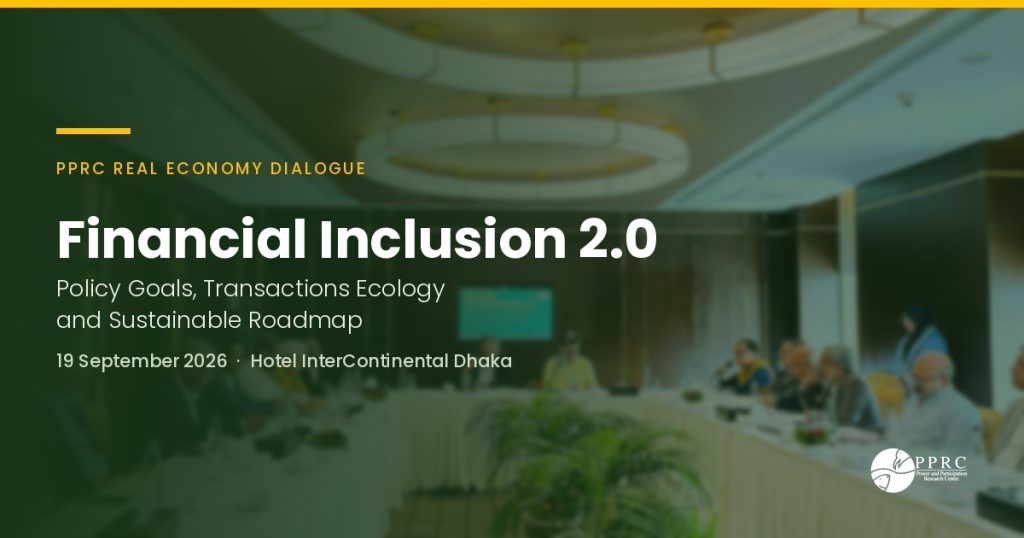
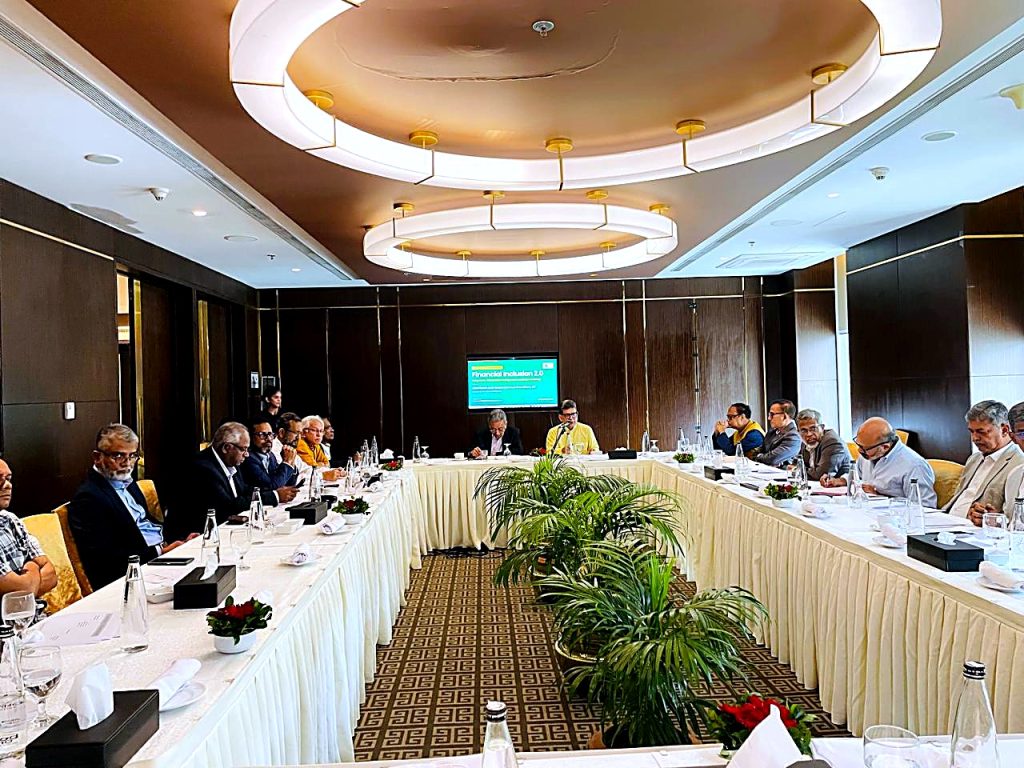
PPRC Real Economy Dialogue | 19 September 2026 | Hotel InterContinental Dhaka
Bangladesh has made significant gains in financial inclusion. At a national policy dialogue convened by PPRC, policymakers, bankers, regulators and digital finance leaders argued that the next phase must be judged by a harder test: whether finance actually enables people and enterprises to invest, grow and create jobs.
The question has changed
Bangladesh’s financial inclusion agenda has until now had a clear target and a clear measure. The target was the unbanked. The measure was reach. On that test, the country delivered significant gains. Microfinance institutions took supervised credit and savings to the client’s doorstep. Mobile financial services built a low-cost transaction ecology on an operator–distributor–agent model that moved income between rural households, mofussil towns, the capital and the diaspora. Agent banking substituted for the bank branch. Clients were not passive recipients in this: by investing in handsets, they became co-partners in the growth of the digital finance ecosystem.
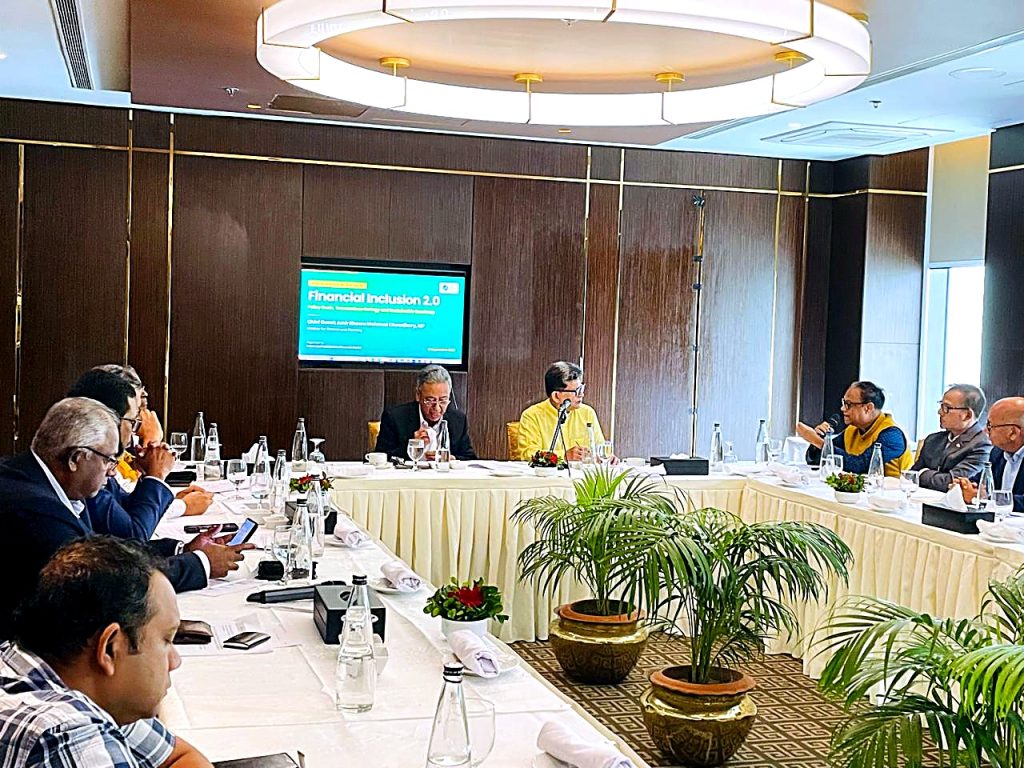
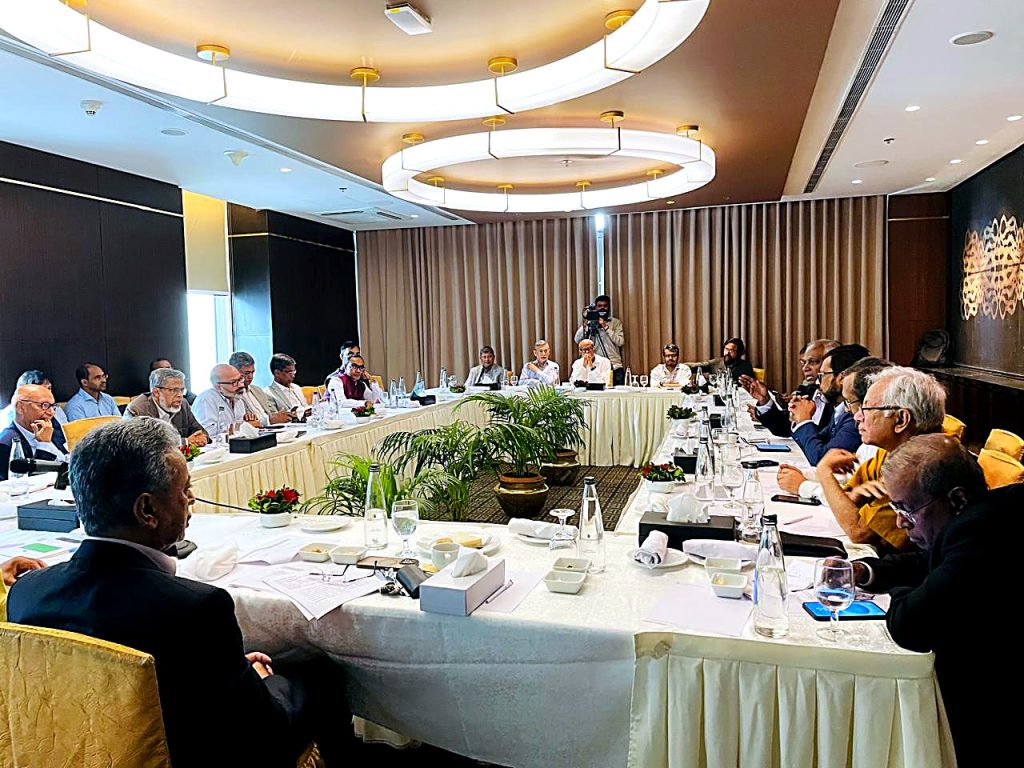
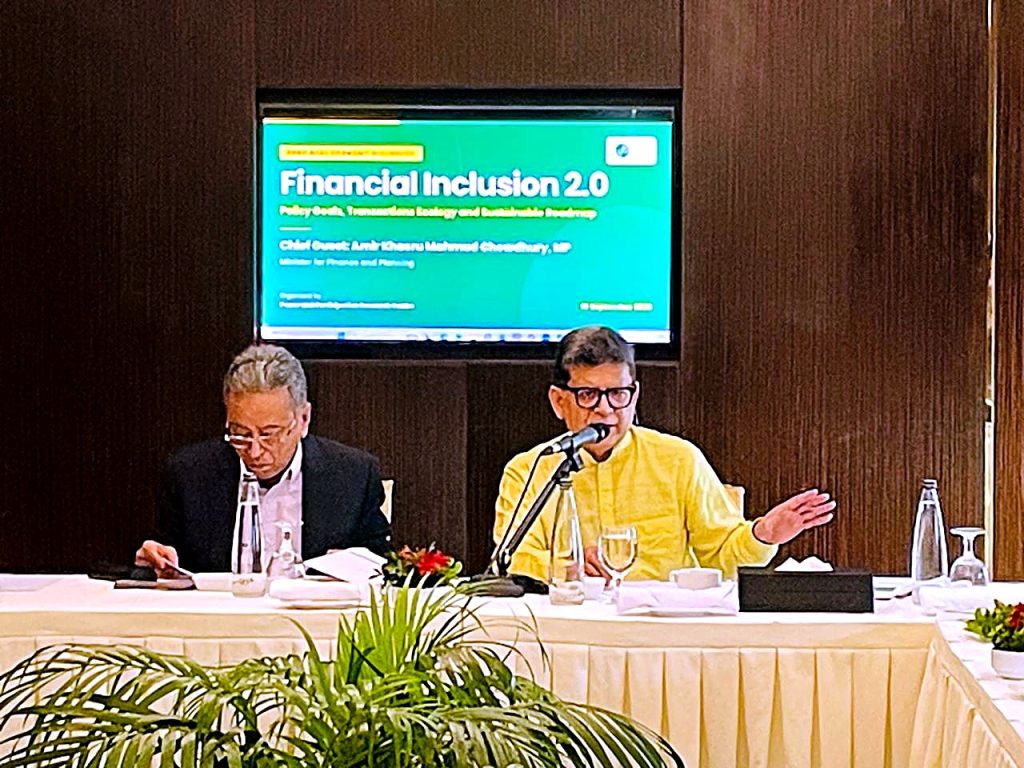
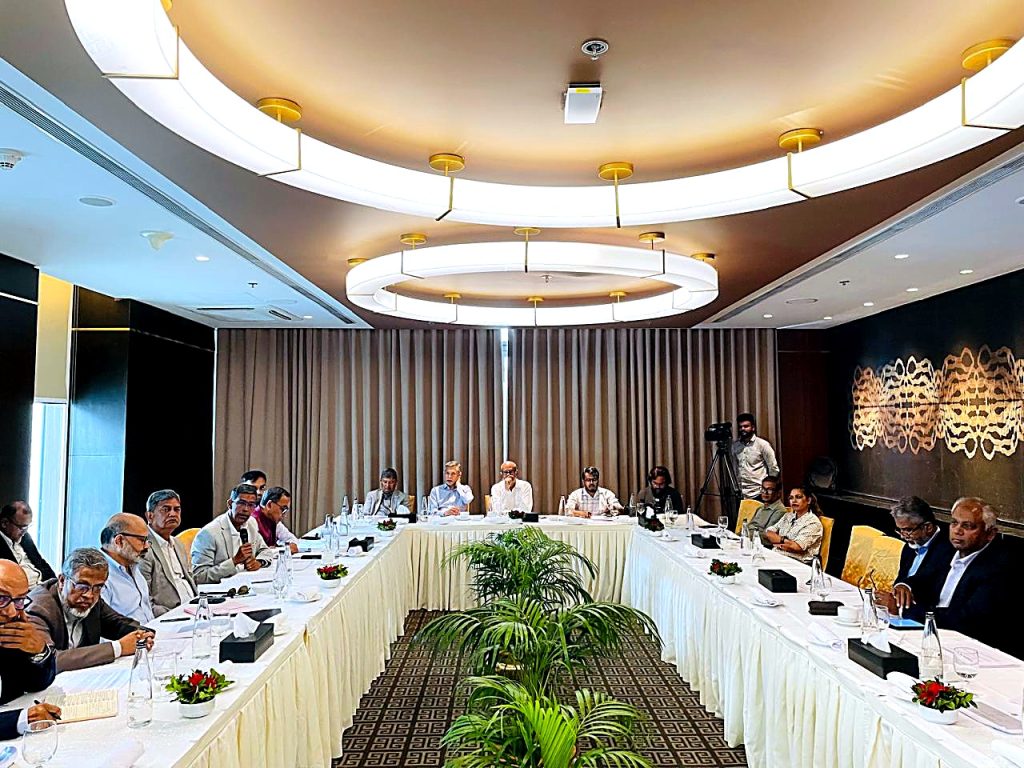
That phase — Financial Inclusion 1.0 — set the foundation. The PPRC Real Economy Dialogue on “Financial Inclusion 2.0: Policy Goals, Transactions Ecology and Sustainable Roadmap”, held on 19 September at Hotel InterContinental Dhaka, was convened to ask what should replace it.
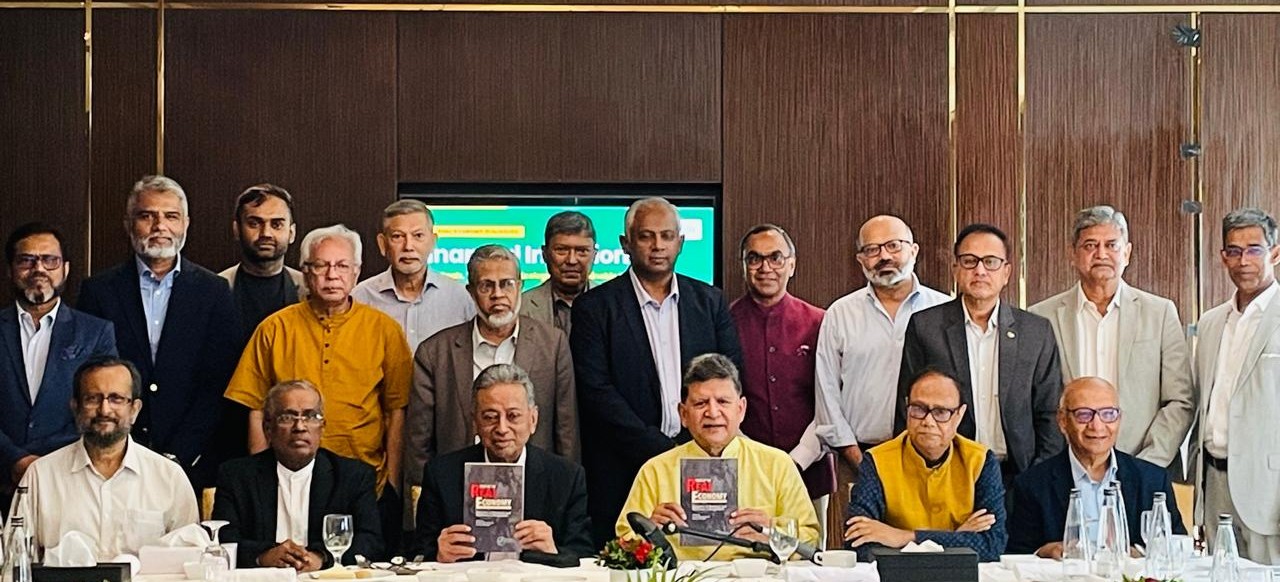
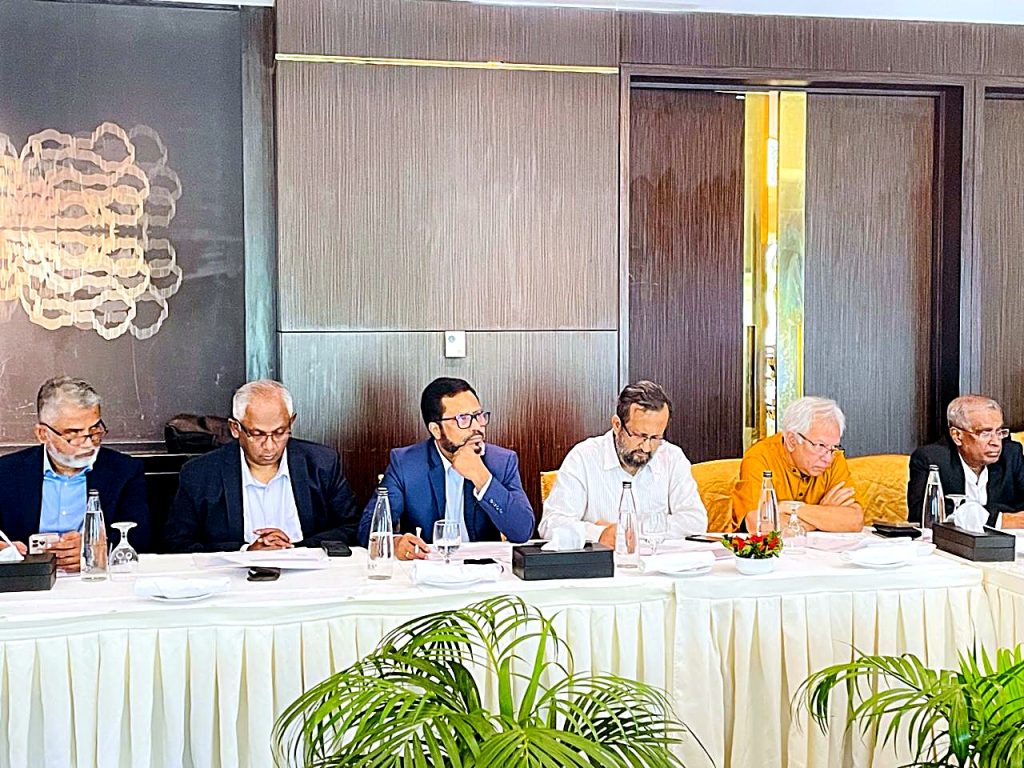
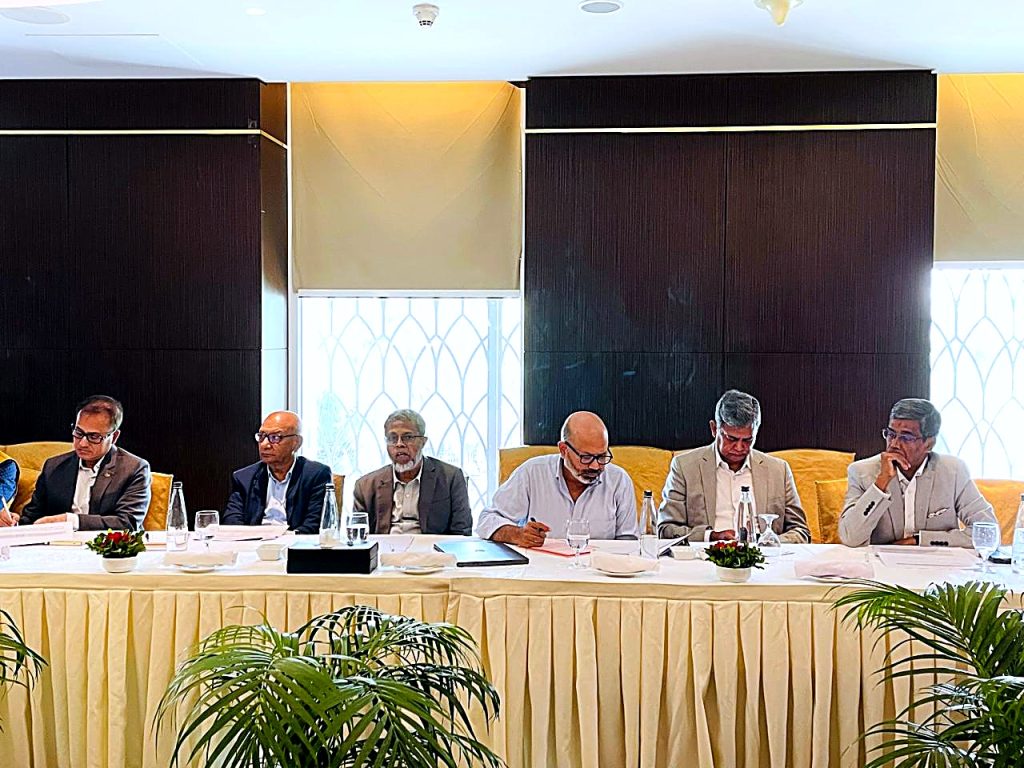
Finance and Planning Minister Amir Khasru Mahmud Chowdhury, MP attended as Chief Guest. Dr. Hossain Zillur Rahman, Executive Chairman of PPRC, chaired and moderated the dialogue and gave the trigger presentation on the Financial Inclusion 2.0 framework.
“Inclusion has not necessarily led to empowerment in every case.”
Agent banking, he noted, focused more on deposit mobilisation than on rural lending. Access was delivered. The economic capability that access was supposed to unlock was not, at least not evenly.
The excluded have changed address
A central shift identified in the framework is in who is now excluded. The binding constraint has moved from the unbanked household to cottage, micro, small and medium enterprises — CMSMEs, which constitute roughly 95% of Bangladesh’s economic units.
The reasons are structural rather than attitudinal. Collateral-based lending disqualifies most of these firms at the outset. Approval and delivery processes are insensitive to the timing on which small enterprises actually operate, so credit that arrives late is often credit that no longer helps. And the microfinance package, designed around a different client and a different purpose, does not fit their needs either. CMSMEs therefore fall between two systems that each work well for someone else.
Dr. Fazlul Kader, Executive Director of PKSF, argued for a reorientation of purpose, calling for “prosperity financing that enables capital formation” and offering a plain test of success:
“The ultimate indicator is employment.”
That reframing — from accounts opened to jobs created — ran through the rest of the discussion.
Payments and credit are not speaking to each other
If CMSME finance is the destination, a recurring obstacle raised on the way there was infrastructural. Bangladesh has a fast-maturing payments system and a slow, collateral-bound credit system, and the two are not connected. Every digital transaction a small enterprise makes is, in principle, evidence of its turnover, its seasonality and its reliability. Almost none of that evidence reaches a lending decision.
Sabbir Ahmed, Visa’s Country Manager for Bangladesh, Nepal and Bhutan, put it without qualification:
“Our traditional SME lending system is not fit for purpose.”
“Our payment infrastructure and credit infrastructure do not talk to each other. They have to talk.”
The cost of assessment is the second half of the problem. Mohammad Mamdudur Rashid, Managing Director and CEO of UCB, located the threshold precisely:
“Only when credit scoring becomes a low-cost commodity can credit reach the truly marginal level.”
As long as assessing a small borrower costs nearly as much as assessing a large one, the economics push lenders upmarket regardless of intent.
The data underneath the score is the third. Mohammad Helal Uddin, Executive Vice-Chairman of the Microcredit Regulatory Authority, pointed to a fragmentation that no amount of analytical sophistication can compensate for:
“If the bank CIB is not joined with the MFI CIB, any score is incomplete.”
A borrower’s history is currently split across institutional silos. A lender sees one half and prices for the risk of not seeing the other. Participants called for better-connected payment and credit systems, lower-cost credit assessment, and greater use of financial data with customer consent.
Going digital without breaking what works
A recurring caution in the dialogue was that the transition to an integrated digital financial system could damage the very ecosystem that made inclusion possible — not through bad intent, but through inattention to incentives.
Kamal Quadir, CEO of bKash, framed the requirement in terms of sequencing:
“For a digital future transition, we must have ecological preparation.”
Md. Arfan Ali, Founder and Chairman of Zaytoon Business Solutions and former Managing Director of Bank Asia, named the priority:
“When you speak of Inclusion 2.0, interoperability must be priority number one.”
On Bangla QR and Zero IRF specifically, Kaiser A. Chowdhury, Chairman of Nagad, put the transition risk as a question about capacity:
“Can our banks fill the vacuum of some 15 lakh agents overnight?”
And Syed Mahbubur Rahman, Managing Director and CEO of Mutual Trust Bank, set out the commercial condition on which any of it depends:
“Every stakeholder needs to see an incentive, otherwise cash becomes easier and cheaper.”
The underlying point is that Bangladesh’s digital finance system is held together by commercial incentives at every link in the operator–distributor–agent chain. A reform that removes the margin at one link without replacing it does not produce a more efficient system; it produces a return to cash.
Adoption constraints outside the financial sector were raised as well. Mahtab Uddin Ahmed, former President of ICMAB and former CEO of Robi Axiata, identified a pricing distortion working against data use:
“Bangladesh is the only country in the world where voice price has a mandatory floor price … so there is disincentive in the data business.”
Muhammad Abdul Mazid, former Chairman of NBR and Chairman of the Social Development Foundation, summarised the coherence problem between stated objectives and actual implementation:
“The government must come out of self-contradiction.”
Connectivity as economic infrastructure
Speaking as Chief Guest, Finance and Planning Minister Amir Khasru Mahmud Chowdhury, MP added connectivity to the list of foundational inputs that economic policy normally reserves for energy:
“Everyone says power, gas. I would add one more: robust internet,” he said. “Without robust internet, the digital economy has no future.”
The Minister said the Cabinet-approved “one citizen, one wallet” initiative was under process, expressed support for wider credit-rating coverage and nano-lending, and indicated that digital banking would move forward soon. He also stressed that expansion and safeguards must advance together:
“You cannot do digitalization, AI operation, without guardrails.”
Roadmap, not big bang
PPRC’s framework places a deliberate emphasis on implementation design over announcement. Each policy instrument, it argues, must be paired with the system question it is supposed to resolve: stimulus refinancing with the transmission channel, priority sector targeting with sectoral voice, Bangla QR and the digital future with guardrail and incentive-breakdown risks. The record of large initiatives that lacked end-to-end planning — under-utilised Covid stimulus financing for agriculture and SMEs, an over-driven home solar programme, hi-tech parks still severely underused amid an infrastructure-first policy focus — was presented as the argument for that discipline.
Closing the session, Dr. Rahman said Financial Inclusion 2.0 must connect financial empowerment, enterprise growth, employment and an integrated digital financial system, while preserving the strengths of the ecosystem Bangladesh has already built:
“A big-bang approach is not the relevant way forward.” It is, he said, “about getting those second- and third-order policy steps right.”
The dialogue additionally covered agricultural and retail finance, microfinance regulation, digital fraud and cybersecurity, smartphone affordability, financial literacy, and the integration of credit information.
Media Coverage
The PPRC Real Economy Dialogue on “Financial Inclusion 2.0: Policy Goals, Transactions Ecology and Sustainable Roadmap”, held on 19 September 2026, received coverage across leading national English and Bangla media. Reports highlighted the need to move beyond financial access towards economic empowerment, improve financing for CMSMEs, strengthen digital financial infrastructure, and build an interoperable and inclusive financial ecosystem.
- The Daily StarDigital finance grows, but small firms struggle for credit: experts
- The Financial ExpressBangla QR to pace up financial inclusion, digitisation: Experts
- The Business Standard — Banglaদেশে শীঘ্রই ডিজিটাল ব্যাংকের লাইসেন্স দেওয়ার কথা ভাবছে সরকার: অর্থমন্ত্রী
- Bangladesh Sangbad Sangstha (BSS) — EnglishRobust internet, one citizen-one wallet needed for sustainable development: Amir Khosru
- Bangladesh Sangbad Sangstha (BSS) — Banglaরোবাস্ট ইন্টারনেট ও ডিজিটাল আর্থিক অন্তর্ভুক্তির মাধ্যমে টেকসই উন্নয়ন সম্ভব : অর্থমন্ত্রী
Show all 19 reports
- United News of Bangladesh (UNB) — EnglishRobust digital connectivity key to sustainable development: Finance Minister
- UNB — Banglaটেকসই উন্নয়নে শক্তিশালী ডিজিটাল সংযোগ অপরিহার্য : অর্থমন্ত্রী
- Daily SunRobust internet, one citizen-one wallet can ensure sustainable dev: Khosru
- Bangladesh PostStrong digital connectivity key to sustainable development
- The New NationGovt to issue digital bank licences soon: Finance Minister
Bangla media
- Jugantorরোবাস্ট ইন্টারনেট ও ডিজিটাল আর্থিক অন্তর্ভুক্তির মাধ্যমে টেকসই উন্নয়ন সম্ভব: অর্থমন্ত্রী
- Samakalদেশে স্মার্টফোন উৎপাদন শুরু, পাওয়া যাবে ৪ হাজার টাকায়: অর্থমন্ত্রী
- JagoNews24দেশে ৪-৫ হাজার টাকার মধ্যে স্মার্টফোন উৎপাদন শুরু হয়েছে: অর্থমন্ত্রী
- Dainik Bangla৪ হাজার টাকায় স্মার্টফোন, উৎপাদন হবে দেশেই : অর্থমন্ত্রী
- NTV Onlineটেকসই উন্নয়নে শক্তিশালী ডিজিটাল সংযোগ অপরিহার্য : অর্থমন্ত্রী
- Sangbadআসছে ‘এক নাগরিক এক ওয়ালেট’
- Protidiner Sangbadডিজিটাল আর্থিক অন্তর্ভুক্তির মাধ্যমে টেকসই উন্নয়ন সম্ভব
- Digi Banglaডিজিটাল অন্তর্ভুক্তিতে চাই রোবাস্ট ইন্টারনেট
- Sokaler Somoyএক নাগরিক এক ওয়ালেট ছাড়া টেকসই উন্নয়ন সম্ভব নয়: অর্থমন্ত্রী
More Coverage
The dialogue was also reported or syndicated by a range of other national and online news platforms, including Energy Tribune, GreenWatchBD, Outlook Bangla, Economipost, BDMail24, Dhaka Journal, Nagorik TV, 24 Live Newspaper and other outlets.